
The May 2026 Periclean
Sharing updates and stories from our network of civic champions, delivered on the first Friday of each month.

What the Early Years Made Possible
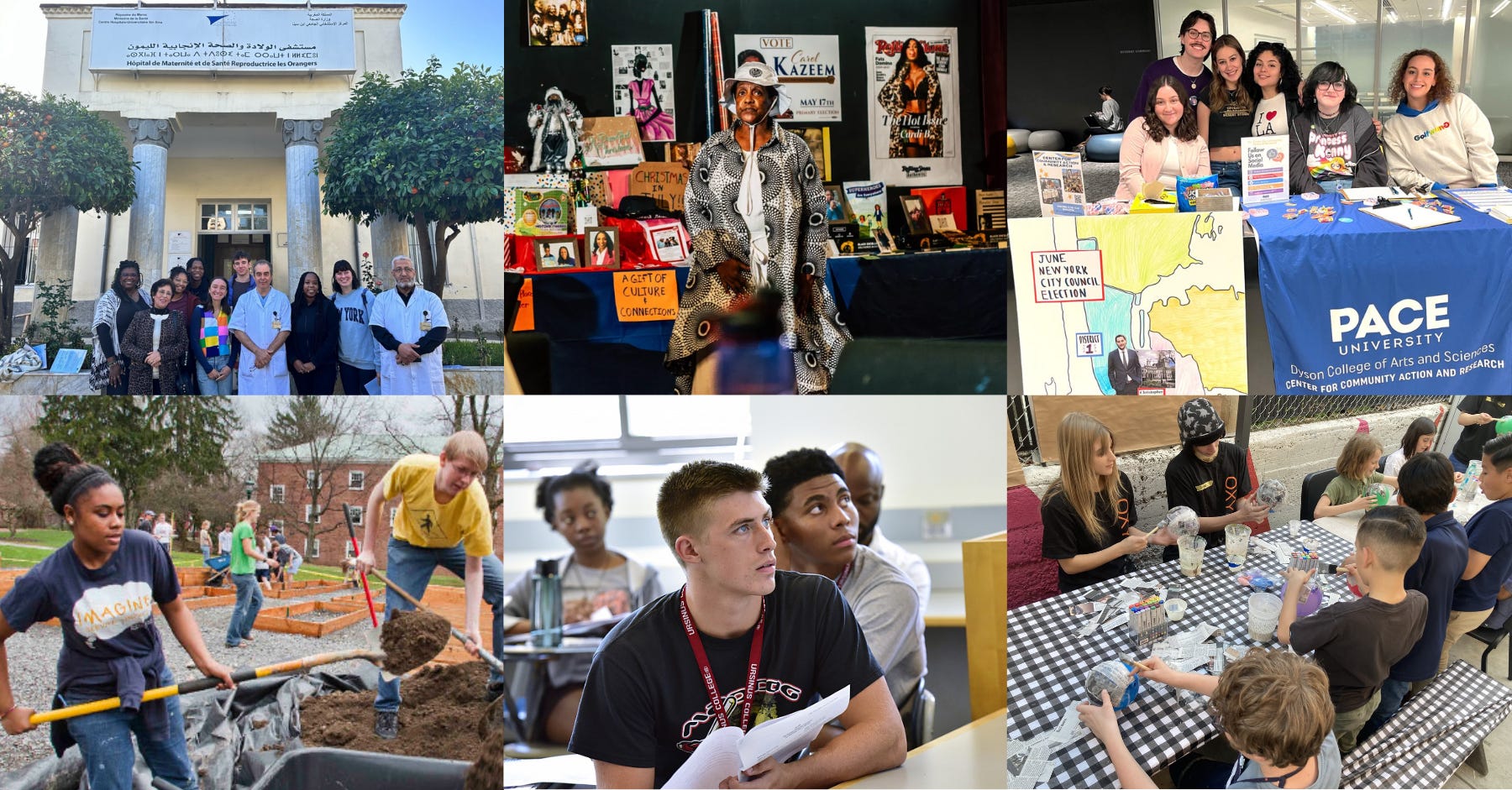
In 2001, a group of ten colleges and universities came together to found Project Pericles and advance community-engaged civic learning in higher education.
At first, this budding organization lacked a shared curriculum, hallmark programs, or an established playbook. What it had was a founding vision and the conviction that higher education had a responsibility to cultivate engaged, socially conscious citizens. Each institution was free to determine what that looked like on its campus.
By 2006, Program Directors at early Periclean campuses were building civic infrastructure: new centers, new courses, new community partnerships, and even new ways of thinking about the purpose of undergraduate education.
Much of what these early Program Directors built has evolved over the past two decades, and is now part of the permanent fabric of their institutions.
Read the full story of how Project Pericles’ founding campuses shaped the first chapter.
This is an excerpt from the second article in our Impact25 series, commemorating Project Pericles’ 25th anniversary. You can also read the first article, “The Project Pericles Origin Story: A Daring Work in Progress.”
In this edition, we’ll be covering:
Honoring Hampshire College
Recap: 2026 Engaged Scholarship Consortium
Civic Story Lab Closing Program Invitation
May Periclean Community Conversation
Periclean Thought Leadership
Staff Reads
Honoring Hampshire College

As you may know, Hampshire College has announced it will close at the end of 2026. We are saddened by this news and write to share our sympathies and offer a tribute to Hampshire’s Periclean Program Director, Javiera Benavente, and the broader Hampshire College Community.
One of the initial ten Periclean campuses, Hampshire has long been a part of Project Pericles’ work and a pioneer in bringing civic learning to higher education. Our founder, Eugene Lang, recognized this early on. In a publication titled “A Daring Work in Progress,” he observed that their President at the time, Gregory S. Prince Jr., anticipated that their civic engagement activities would be transformative: “Let’s all realize—we have undertaken to lead an historic transformation of higher education in the United States.”
In those early years, they overhauled their community service program to improve the visibility of community-based learning and develop deep relationships with community partners. They institutionalized new principles that shaped their approach to civic learning across the curriculum.
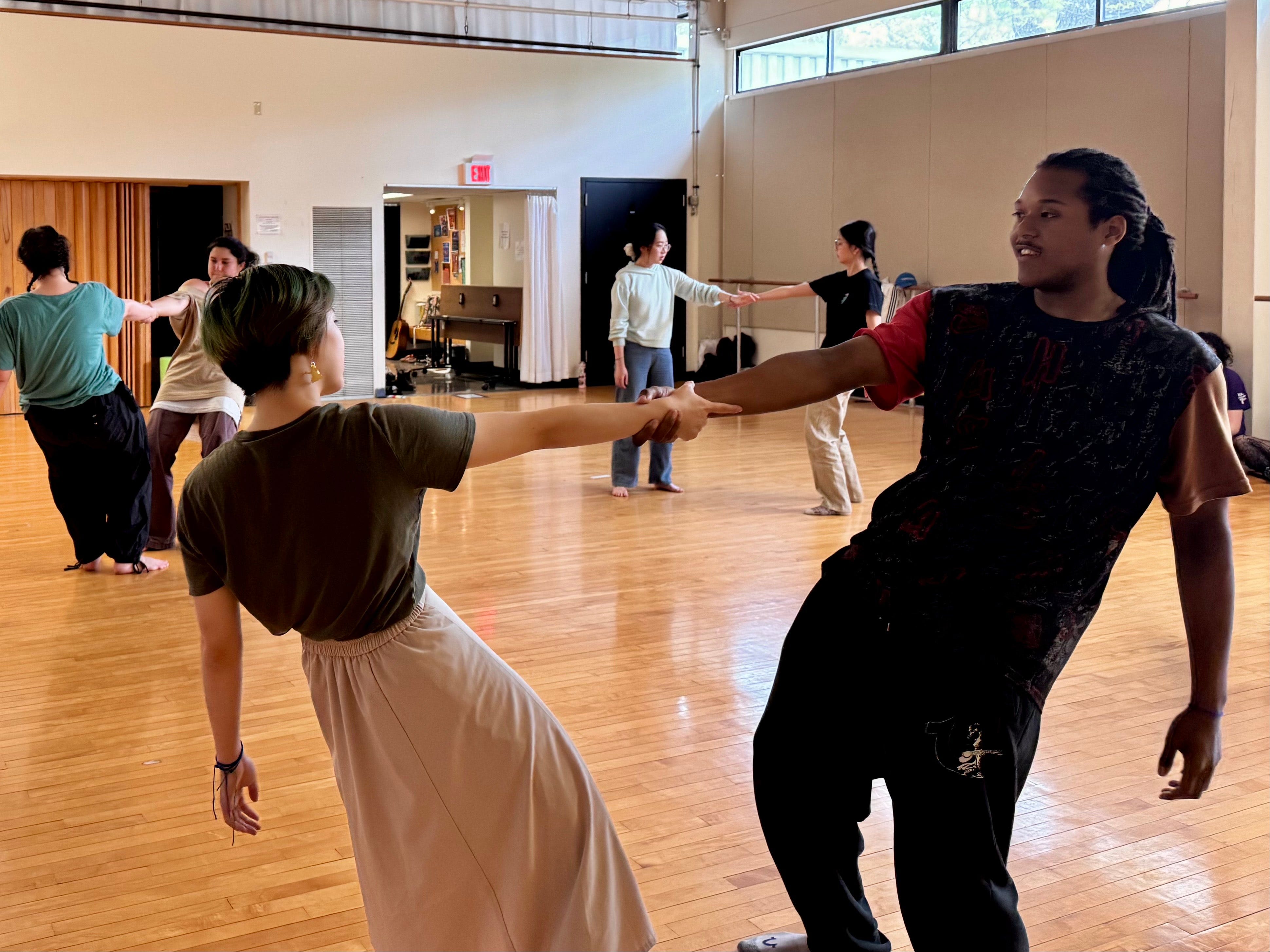
Today, Hampshire faculty are deeply respected members of our consortium. Their Periclean Faculty Leaders are producing innovative pedagogy, which we have spotlighted in the past, and their students are pioneering new storytelling strategies in partnership with Indigenous-led land stewardship efforts.
Javiera and her colleagues leave us a legacy to sustain. As fiscal constraints continue to challenge higher education institutions across the country, we share this note to affirm that this kind of civic engagement work matters: for students, colleagues, communities, and for our democracy. If you are able to support Hampshire’s workers during this transition, you can contribute to their emergency relief fund here.
A New Chapter for the Periclean Consortium
This spring, we are opening up membership and inviting a small number of colleges and universities to join the Periclean consortium. We are looking for colleges where the public purpose of education is a north star–where leaders are making civic learning an institutional priority, faculty are committed to community-engaged civic learning, and students are being prepared to participate in democratic life.
Periclean membership means joining a community of institutions that share this conviction. It comes with meaningful resources–grants, peer relationships, and national visibility–and meaningful expectations. At the heart of it is the chance to do this work alongside people who take it as seriously as you do.
Letters of Interest are due June 15. If you are interested in exploring membership or want to nominate an institution you think would be a great fit, we’d love to hear from you.
Recap: 2026 Engaged Scholarship Consortium
Project Pericles’ Civic Impact and Communications Coordinator, Harry Hou, recently attended the 2026 Engaged Scholarship Symposium at Swarthmore College, where he participated in discussions about the evolving landscape of civic engagement in higher education and reflected on storytelling as a tool for community impact.
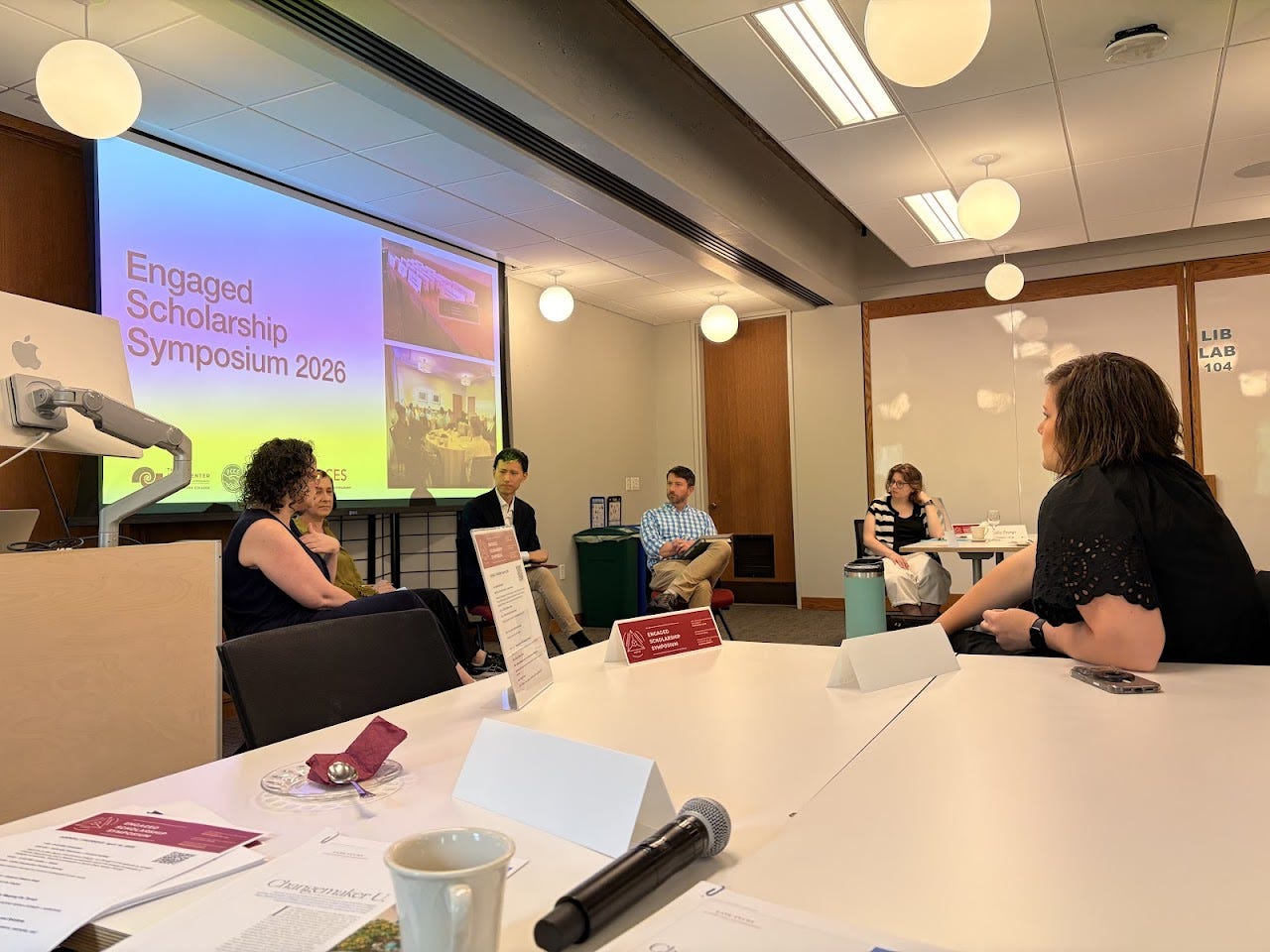
During the opening session, Dave Harker (PCCE), Natalie Furlett (Campus Compact), Eden Kainer (PHENND), and Harry noted a growing shift underway: traditional membership-based organizations are moving toward more flexible, field-wide approaches that enable broader collaboration.
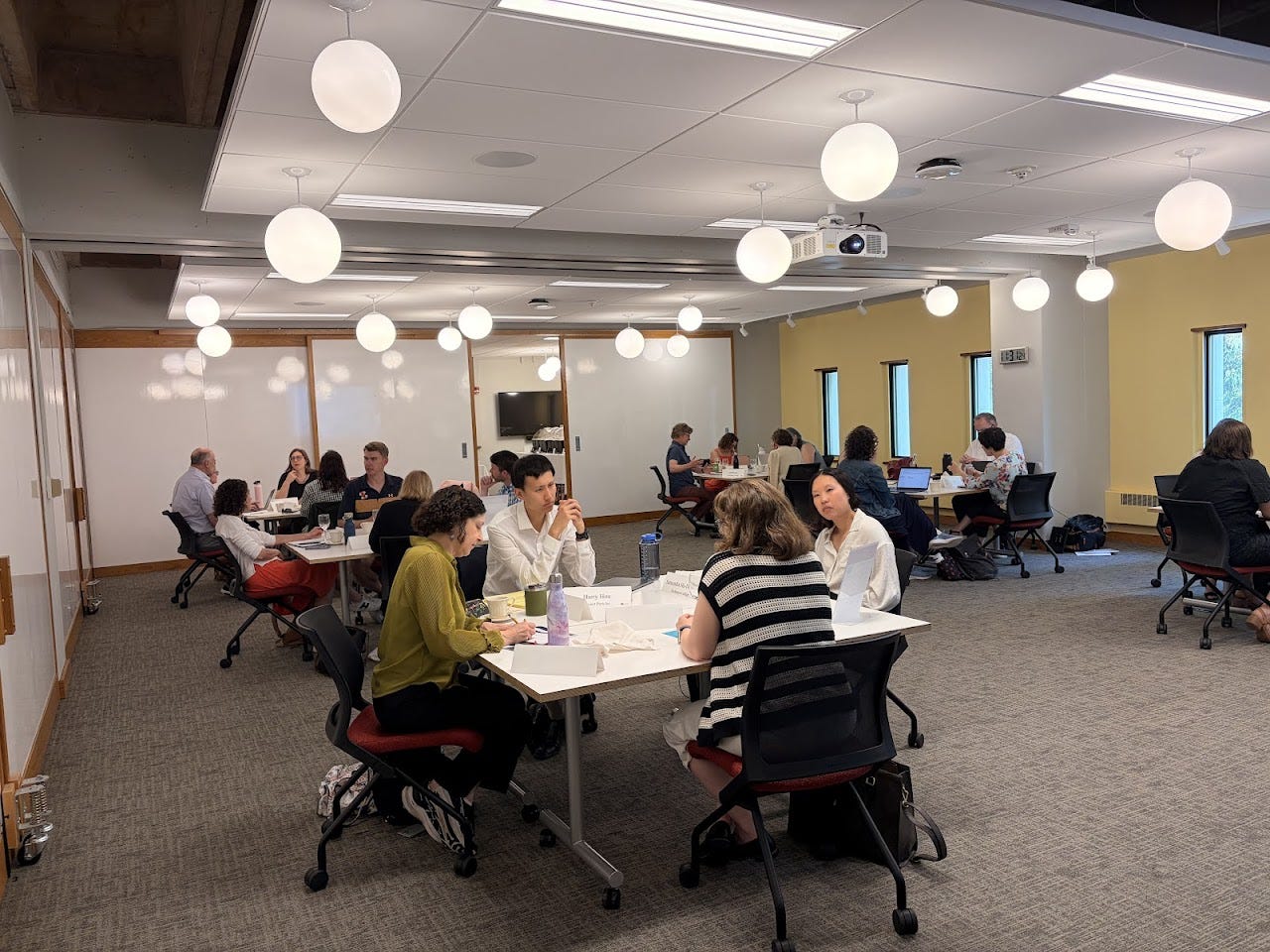
In connective breakout sessions, participants discussed the importance of regional collaboration and of building personal relationships to sustain institutional commitments.
A recurring theme was the challenge and opportunity of assessing and communicating impact. Participants highlighted approaches like Ripple Effects Mapping as tools for capturing qualitative impact that numbers alone can’t convey. The group also underscored the need for shared language around civic engagement for internal coherence and to make the case more effectively for institutional leaders and funders.
Participants also pointed to the need for institutions to do more to recognize faculty contributions to engaged scholarship through promotion and tenure practices—a longstanding gap that continues to undermine the field’s sustainability.
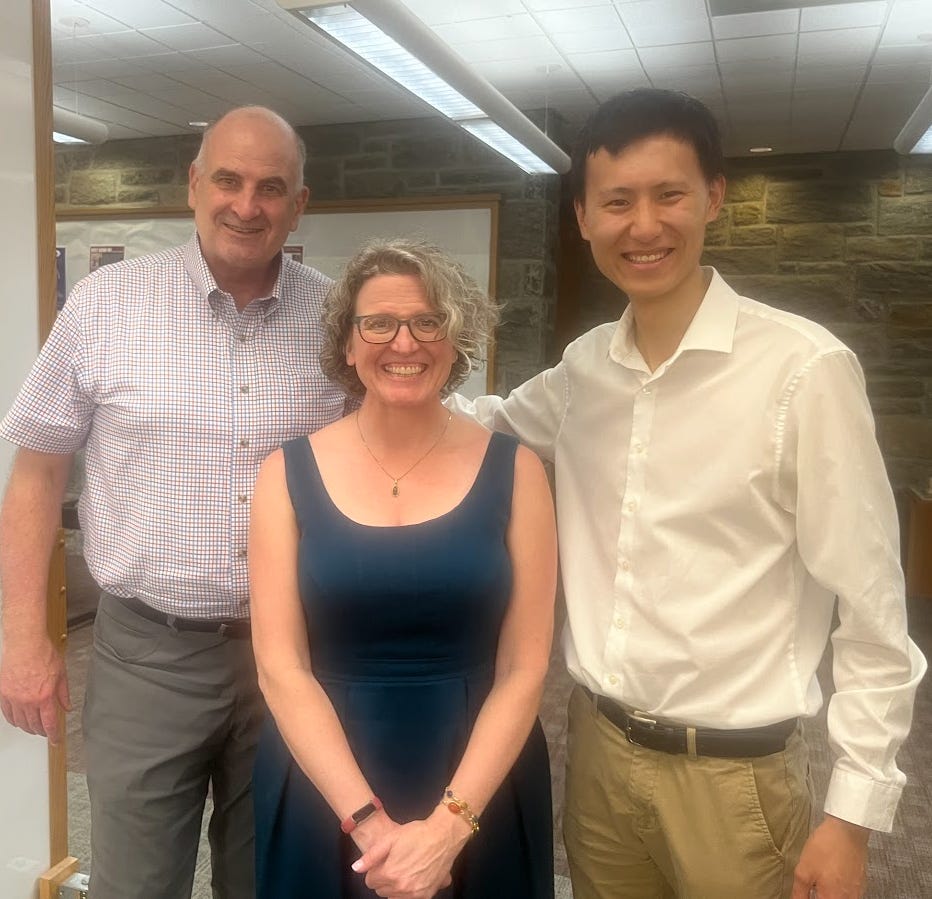
Harry also connected with faculty from multiple institutions interested in learning more about the Pericles Civic Fellowship.
Ultimately, the Symposium deepened our thinking on how civic learning is recognized and sustained within institutions, and it introduced us to key partners in the field we hope to continue building with.
Join Us! Civic Story Lab Closing Program
On Wednesday, May 27, from 2:30 PM - 3:30 PM ET, Project Pericles will be hosting our Civic Story Lab closing program presentations. Throughout the semester, fellows have been developing narrative projects—podcasts, photo essays, zines, and more—that amplify community voices and reflect student-driven civic learning.
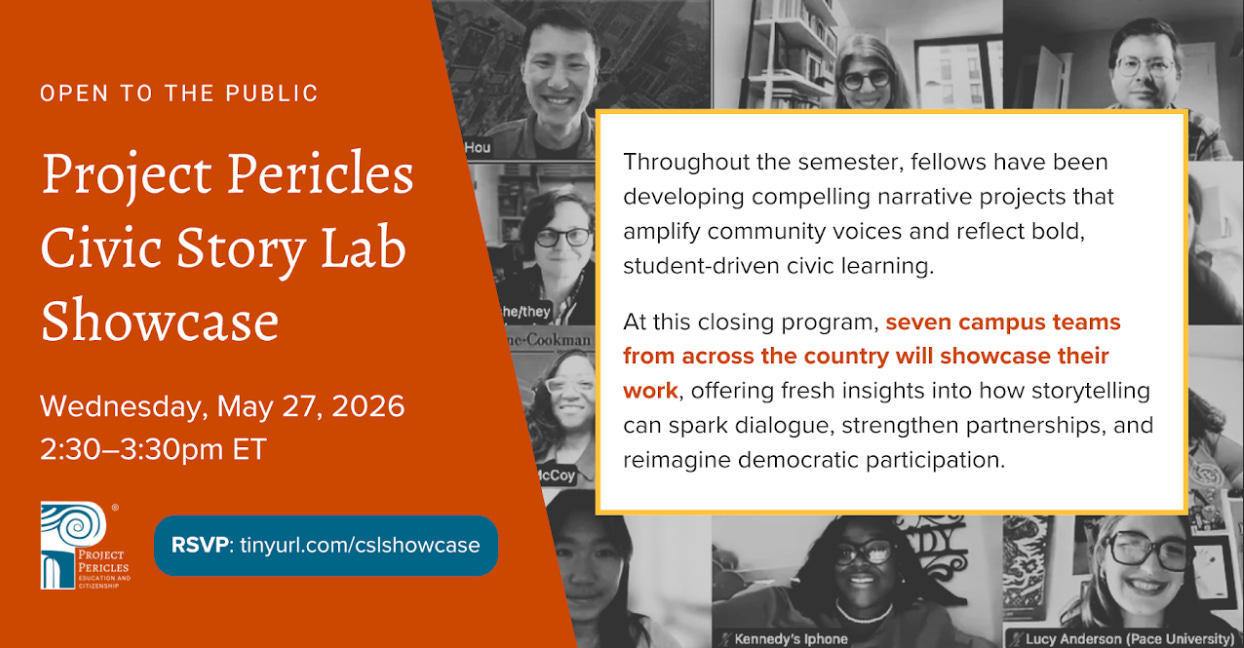
Seven campus teams will present their work—a chance to experience what student-driven storytelling looks like across very different institutional contexts.
You are warmly invited to join teams from Allegheny College, Bethune-Cookman University, Hampshire College, Macalester College, Pace University, Skidmore College, and Ursinus College for this showcase by responding below.
Register Now! May Periclean Community Conversation
Friday, May 15 | 2:00 PM - 3:00 PM ET | Zoom
Project Pericles will host a Virtual Community Conversation on Friday, May 15, from 2–3 p.m. ET. This is an opportunity for faculty and staff across the Periclean community to reflect on their work, hear from peers, share resources and insights, and draw inspiration from our collective commitment to community and civic engagement.
Periclean Thought Leadership
Bates College: Yun Garrison wins Lee Young Leadership Award from YWCA
Yun Garrison, Periclean Faculty Leader (Bates College)
Bates College Professor and PFL Yun Garrison was recently honored with the Lee Young Leadership Award from the YWCA of Central Maine. The award, given for excellence in professional, community, civic, or artistic leadership, was awarded to Garrison in recognition of her community-engaged work, including the Ka Bogso initiative and her community art installation, Lewiston is Our Hope. Garrison also recently published an article in the Asian American Journal of Psychology titled “A Dialectical Framework of Work Ethic and Rest Ethic for Asian American Psychology.”
Winning Women GROWING Together ToGetHer: A Three Year Presidential Reflection on Faith, LeadHERship, and Global Sisterhood
Dorcas McCoy, Program Director (Bethune-Cookman University)
Dorcas McCoy recently published a book that serves as a “powerful, faith-centered call to action for women across generations to rise in wisdom, wellness, and wealth.” The first Chapter, “Ain’t I a Woman? Garden Views of Women and Civic Engagement,” was supported in part by a Deliberative Dialogue Mini-Grant from the Up to Us program, in partnership with Project Pericles.
Rhodes College: Gottlieb Receives Second Fulbright Scholar Award
Eric Gottlieb, Periclean Faculty Leader (Rhodes College)
Periclean Faculty Leader Dr. Eric Gottlieb, a Rhodes College mathematics professor, received a Fulbright Scholar Award to teach and research combinatorial game theory at the University of Primorska, highlighting his ongoing international collaboration and work on the computational complexity of games.
Today at Elon: The Center for Design Thinking consults with Project Pericles to foster civic storytelling across six university communities
Danielle Lake, Periclean Faculty Leader (Elon University)
Elon University recently featured the Center for Design Thinking’s partnership with Project Pericles to mentor universities through the Civic Story Lab Fellowship, using storytelling frameworks to promote civic engagement, community trust, and grassroots-driven social change.
What Staff are Reading
Sanda (Executive Director) is reading the Yale Report of the Committee on Trust in Higher Education and a wide range of commentary about it, including by Jeremy Young (AAC&U’s Advancing Public Trust), Michael Roth (Wesleyan University), Nicole Barbaro Simovski (Heterodox Academy), Rick Hess (AEI), and Tim Burke (Swarthmore College), as well as contributing her own.
Arielle (Associate Director) is reading “The Serviceberry: Abundance and Reciprocity in the Natural World “ by Robin Wall Kimmerer in celebration of the mid-spring season. Utilizing the wisdom of the Serviceberry, Kimmerer shares how all forms of flourishing–from ecological to economic–depend on the quality of our mutual relationships, not self-sufficiency.
Jason (Civic Impact Assistant) is reading Shan Foster’s What Hurt Didn’t Hinder, an autobiography that explores the meaning of manhood and the power of both vulnerability and perseverance.
Harry (Civic Impact and Communications Coordinator) is reading “How Colleges Stopped Rewarding Curiosity” from the Chronicle of Higher Education. The piece explores how financial pressures have inhibited students from intellectual exploration.
Maddie (Program Communications and Design Specialist) is reading “What the University of the Future Will Look Like” by Steven Mintz in the Chronicle of Higher Education, which posits that the current model of the American university is broken and outlines seven substitute possibilities.